Three softwoods, all local.
Douglas fir, spruce and ponderosa pine all come off the Western Slope, and each one earns its place on a different part of the job. Here is what we reach for, and why.
Douglas fir
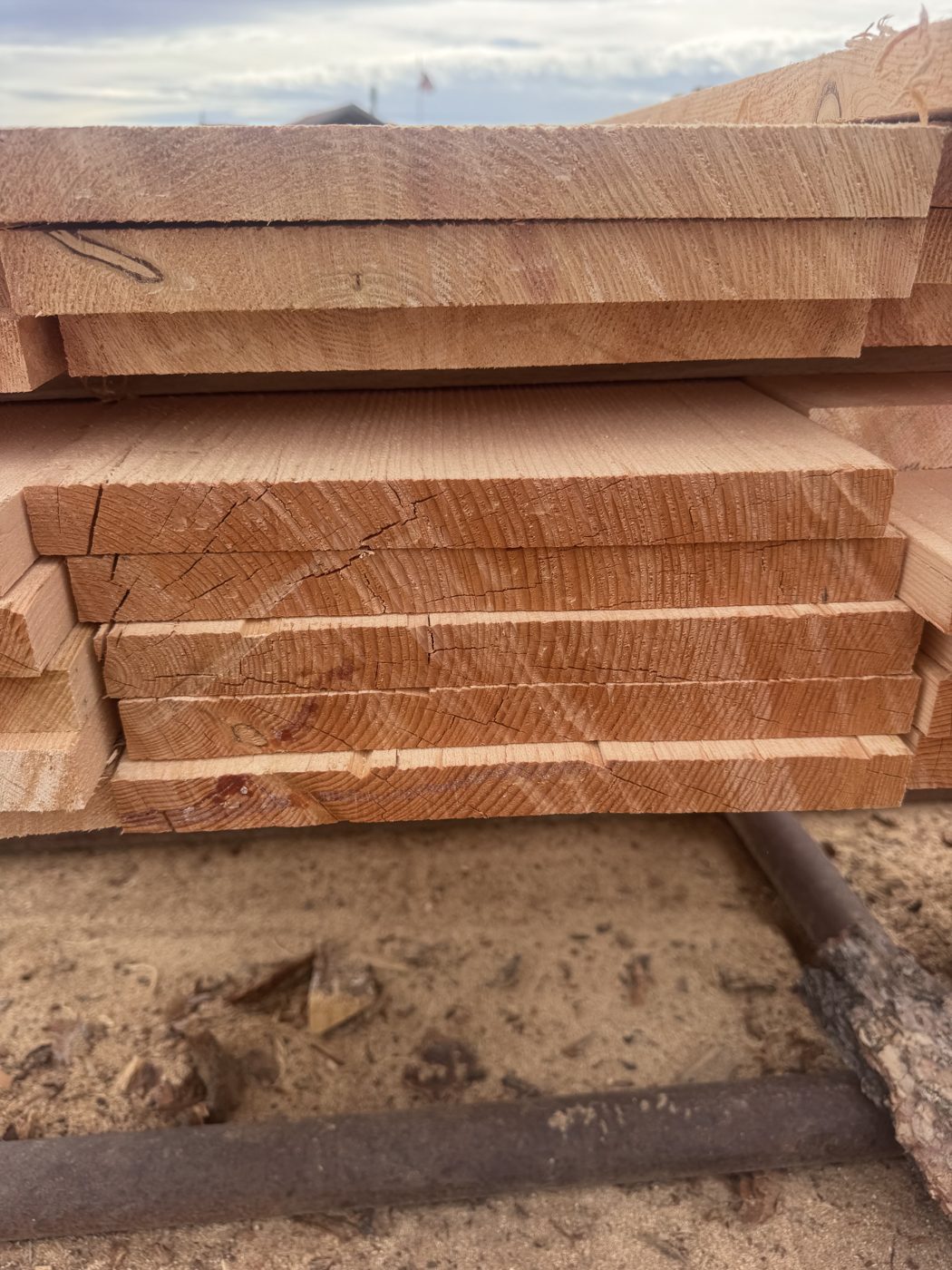
Fir is our go-to structural softwood. When a project has to carry a load, look good doing it and still be local wood, this is where we start. Ours runs tight in the rings, usually 10 to 20 to the inch, so it doesn't shrink much.
Where it does its best work
- Timbers and beams: posts, rafters, pergolas and timber frame entries
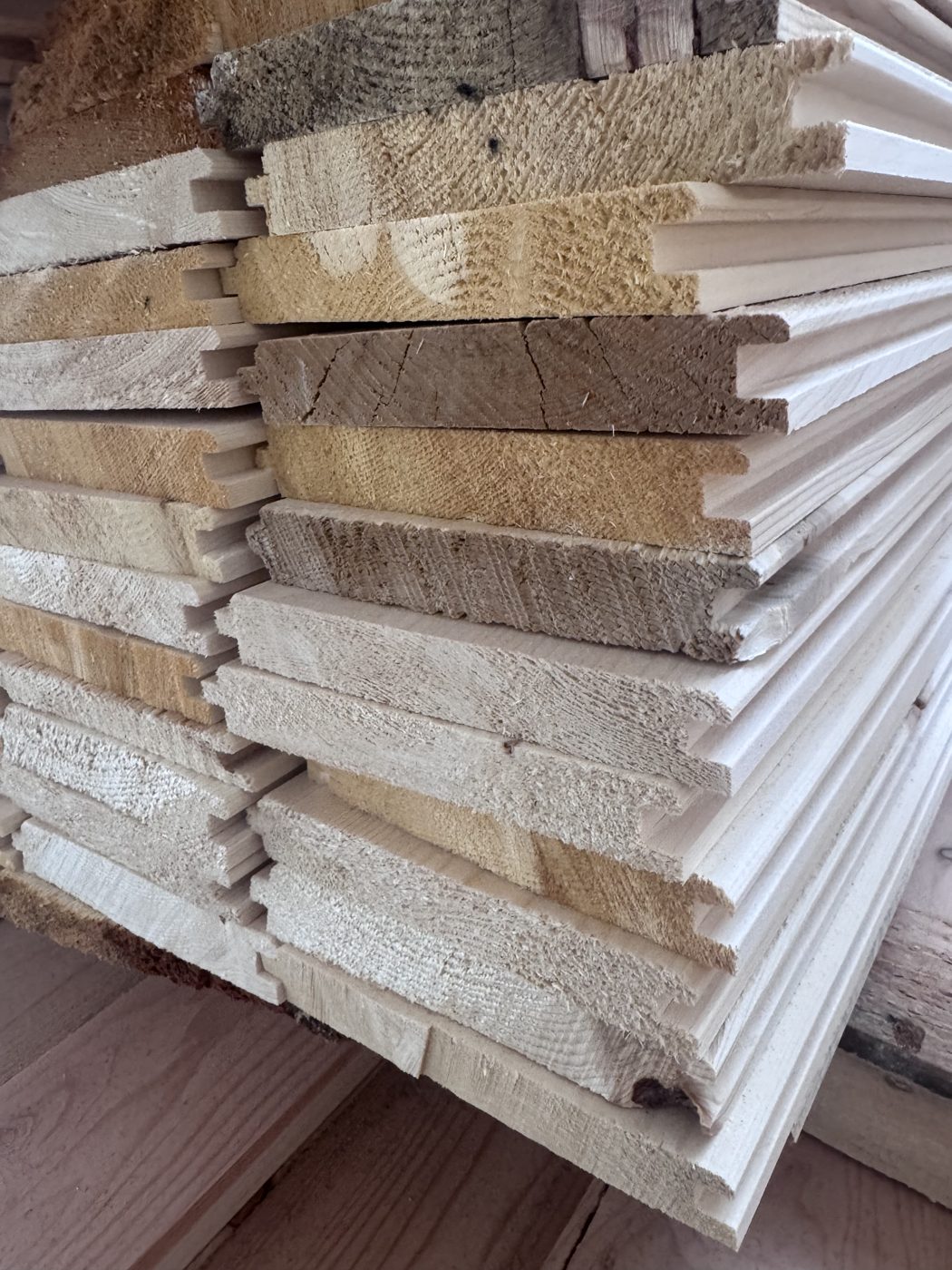
- Tongue and groove and exposed ceilings, when you want more substance than pine
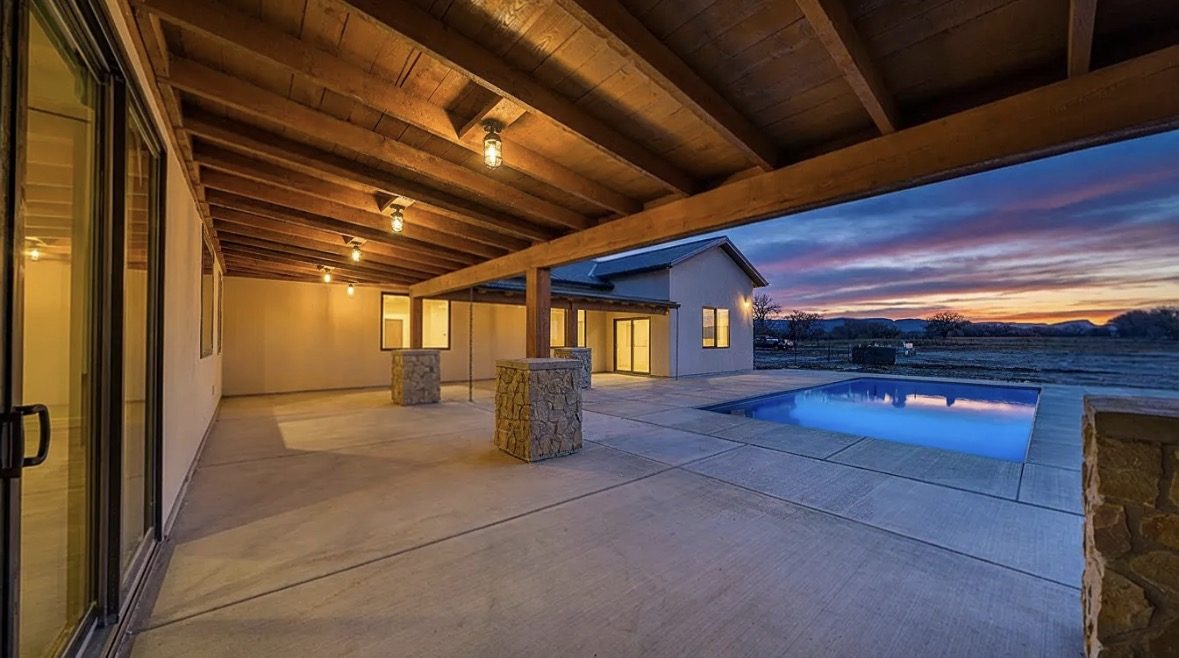
- Mantels and big architectural pieces with character, without hardwood pricing
- Exterior posts, brackets and porch structures
- Framing lumber in the larger and odd sizes a lumberyard doesn't stock
What to know going in
- It is still a softwood. For countertops, stair treads and floors, we'll point you to a hardwood.
- Local fir has knots, pitch pockets and checks. It is not clear, vertical-grain architectural fir, and we won't sell it as that.
- Green fir moves as it dries. Know whether you're buying green, air dried or kiln dried.
- Not every fir log makes structural-grade timber. If your engineer or the code calls for graded material, tell us up front.
Fir is fantastic when you let it be fir.
Spruce
Spruce is a clean, nearly white wood with very little pitch, cut from some of the straightest trees we see. We use it for timbers as well as finish work. It finishes very smooth, and it dries flat and predictable. We have kiln dried a 1x28 that stayed flat.
Where it does its best work
- Timbers, posts and beams. Spruce is not as strong as fir, so we normally oversize it: a 6x6 where fir would be a 4x4.
- Tongue and groove, paneling and paint-grade work
- Wide boards that need to stay flat
- Circle sawn stock, when we have it
What to know going in
- It is very soft. We don't recommend it for flooring or countertops.
- It sits low on our list for ground contact.
- A post with the heart in it will check to the heart. That is true of nearly any timber cut that way.
- We ask that posts be positively attached to beams, with a mortise and tenon, a plate or similar.
Ponderosa pine
Pine is our working wood. It is lighter and softer than fir, easy to work, and once it is sawn into lumber it dries fast and flat. The mountain pine beetle is killing pine across Colorado, and we would rather see that wood put to use than lost.
Where it does its best work
- Siding, including board-and-batten. Like any siding, it needs maintenance.
- Wall panels
- Corral panels and stock panels
- Posts, fence and rails
What to know going in
- Pine makes a good post but not a great beam. Under load it will sag and keep that sag, so we don't span it far.
- It is not the wood for a structure that has to carry a lot or last forever. For that, we start with fir.
The stain changes the color, not the structure.
Blue pine is beetle-kill pine. Some people call it denim pine. The stain runs through blues, purples, pinks, oranges and yellows, and we think it looks great.
The common worry is strength. Studies of blue-stained pine have found no meaningful difference in stiffness or breaking strength, and the fungus that causes the stain does not cause rot. Stained wood can take up more finish, so test your stain or paint first.
Most of our pine logs have some chance of blue stain right now, and we'll tell you so when we quote it.
How the three stack up.
Strength
Fir is on top. Spruce and pine are about even with each other, and a step below fir. That is why a spruce timber normally gets cut a size bigger.
Outdoors
Fir heartwood resists rot best of the three. Pine and spruce sit a class below it. Any wood outside needs maintenance.
Wear surfaces
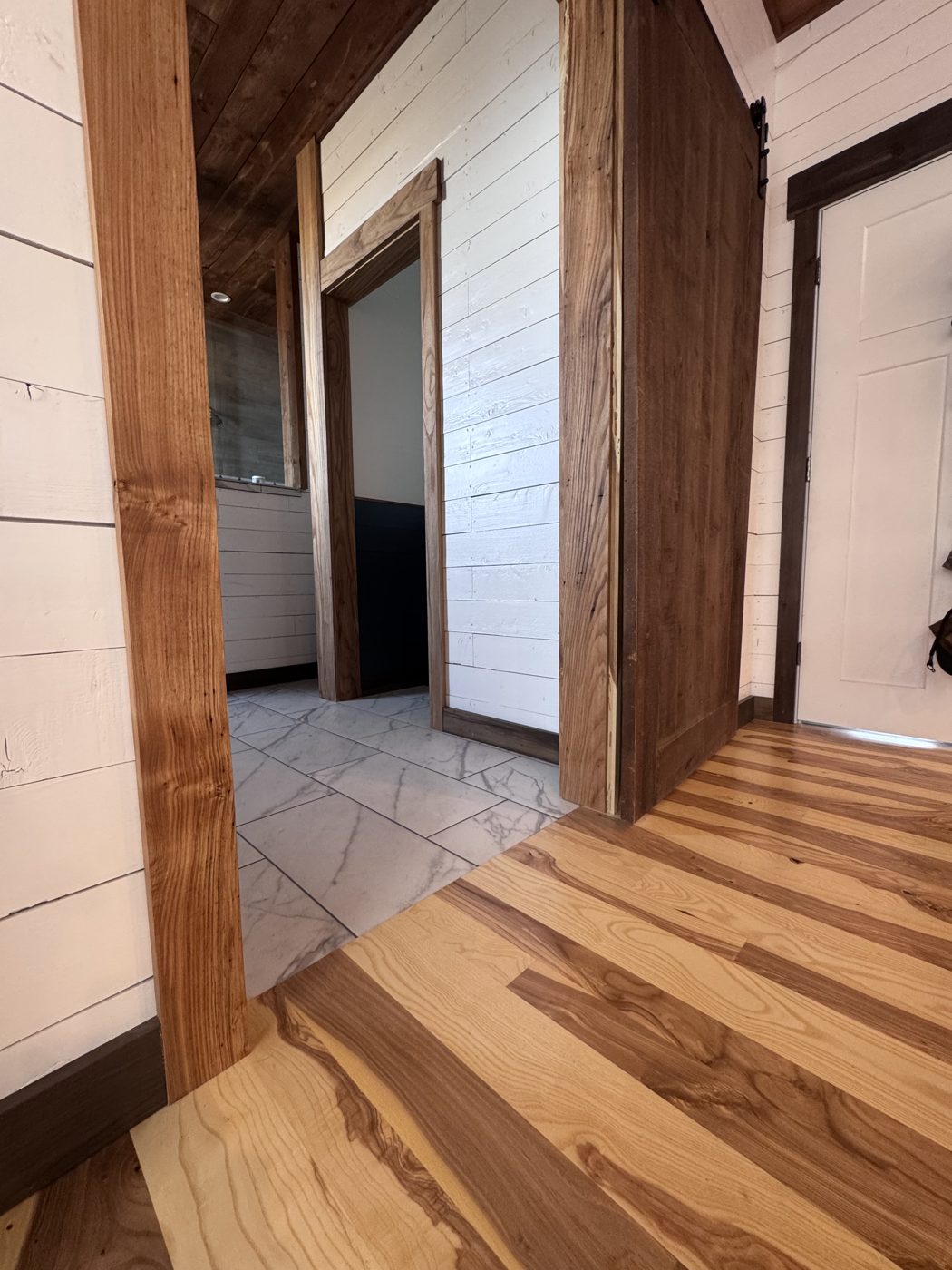
Fir and spruce are both too soft for floors, treads and countertops, and pine is softer than fir. Those jobs want a hardwood like ash or elm. See our local hardwoods.
Tell us what you're building.
We'll match the species to the job and send a quote in about 1 business day.
Rather talk it through?
Grab 15 minutes on the phone, or come walk the yard and see the wood in person.